
I recently returned from XPONENTIAL 2026 in Detroit, and the signal from the showroom floor was undeniable: the UAS industry has fundamentally entered a new phase. Walking the aisles, the pivot was striking. We are witnessing a massive migration away from off-the-shelf consumer platforms toward hardened, specialized business-to-business ecosystems. Driven by geopolitical realities and shipping vulnerabilities, the atmosphere this year was distinctly focused on defense technology, NDAA compliance, and supply chain resilience.
Seeing manufacturers from the U.S., Australia, Europe, Korea, and Taiwan aggressively prioritizing independent, secure pipelines wasn’t just encouraging—it is exactly the maturation the industry needs to scale safely. How many of these component suppliers the market can bear is yet to be seen.
Here is my read on where the drone industry is heading, and how Drone Amplified is building for that future.
1. The Supply Chain Imperative: Security Meets Specialization
A clear mandate has been given to the industry to stop relying on single-source international supply. Today, success in aerial wildfire mitigation requires identifying the right hardware partners who can guarantee both innovation and compliance.
At Drone Amplified, building secure ecosystems is non-negotiable. At the show, we solidified critical relationships that will drive our next generation of platforms:
- Next-Gen Power: At Drone Amplified we have been evaluating novel battery chemistry with cell manufacturers like Amprius. For operations in steep alpine terrain or active fire zones, these advancements are critical for extending flight times and operational range. The SA08 chemistry from Amprius has more than doubled the flight time of the Alta X in testing, and the newer SA88 looks to offer double the discharge current.
- Compliant Components: Securing a resilient supply chain means identifying the right hardware. I connected with teams like Linden Photonix to discuss fiber optic cables and explored NDAA-compliant thermal cores from Ember IR.
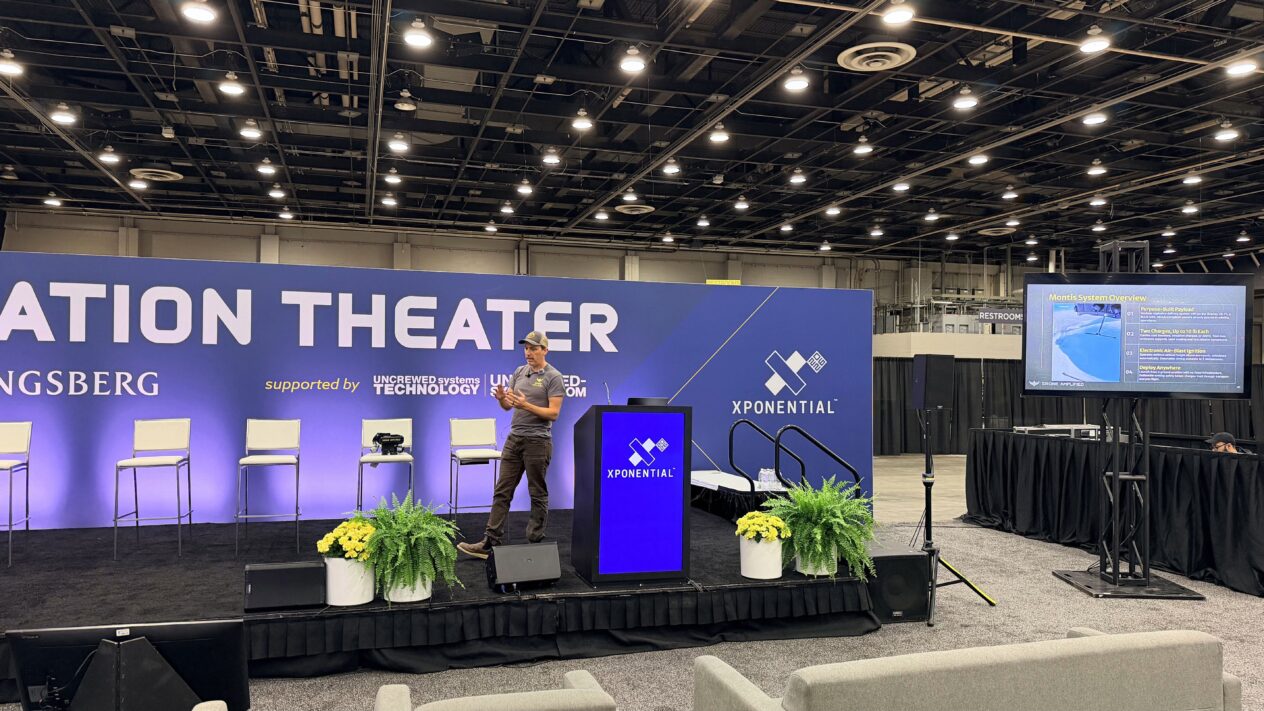
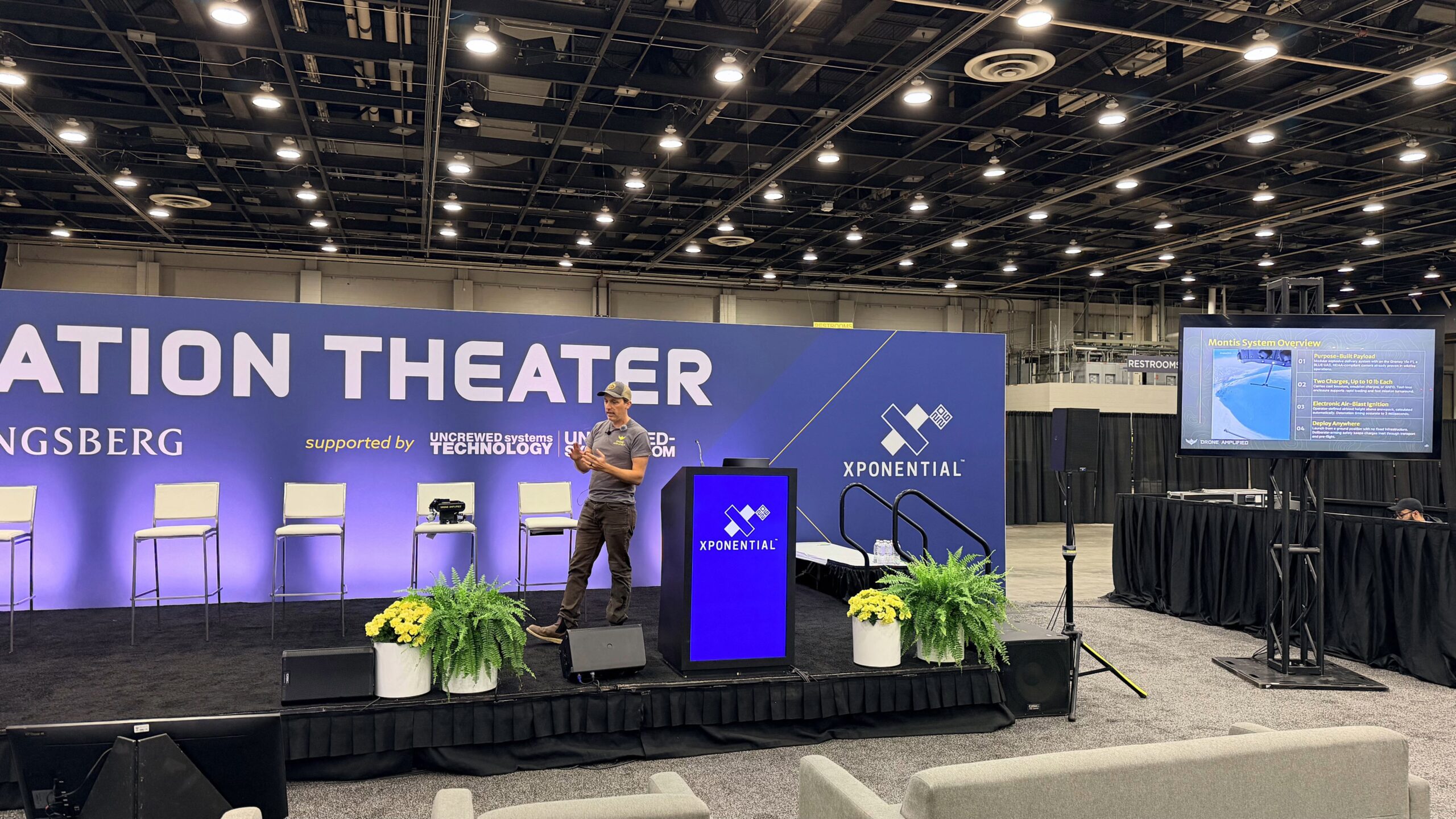
- Precision Camera Stabilization: A major highlight was our continued collaboration with Gremsy. Their new camera lineup, including the Kestrel, will be instrumental in our continued efforts to streamline our payload architectures and make our payloads more adaptable and smaller. Our customers, on the best of days, are required to navigate through tough terrain, smoke, crowded airspace or all of the above. Having a stable image with radiometric thermal and an EO sensor 20x optical zoom make operating in these environments safer and efficient. I was honored to share the stage with Gremsy on Thursday to talk about our payload systems.
2. Looking Ahead: The 10-Year Horizon
The most important conversations at XPONENTIAL weren't just about the hardware on the floor today, but the capabilities that will be required a decade from now.
In discussions with key partners, including the U.S. Forest Service, we explored the long-term strategic roadmap for environmental mitigation. As land management agencies evaluate how to modernize operations and effectively deploy assets across vast, unpredictable landscapes, we believe that adaptable, scalable technology will be a critical piece of the puzzle moving forward.
This perspective shapes how we approach the development of the IGNIS III. Our goal is to provide an operational model that can evolve alongside the industry. By engineering a versatile system capable of scaling to meet varying mission requirements, we are positioning our technology to reliably support the complex, long-term needs of our partners.
The Bottom Line
The proliferation of smart technology in component development proves that this industry is finally ready to support the heavy, reliable lifting our clients require. At Drone Amplified, we will continue leveraging these advancements to build the most effective systems for the most dangerous jobs on the planet.
About Drone Amplified
Drone Amplified develops drone-based systems for hazardous environmental mitigation. We design hardware and software to support professionals working in wildfire and avalanche operations with tools intended to improve access, reduce exposure, and expand operational capability. Born out of research at the University of Nebraska–Lincoln, we operate out of offices in Nebraska and New Jersey.